
Customer feedback is your most powerful tool for building a brand strategy that resonates with your audience. It bridges the gap between what you think your brand represents and how customers actually see it. Listening to feedback helps you improve products, reduce churn, and build trust - all while driving growth.
Key Takeaways:
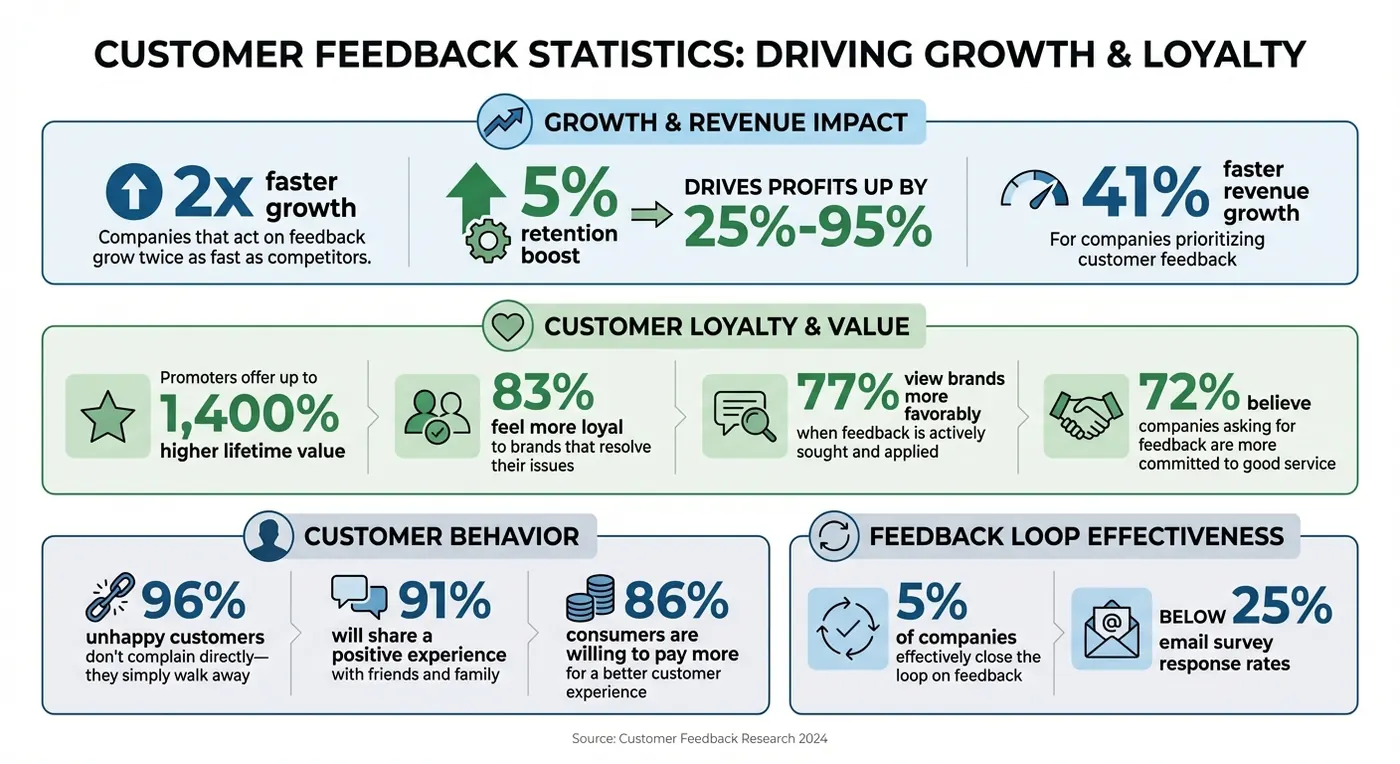
- Why it matters: Companies that act on feedback grow twice as fast as competitors, with a 5% retention boost driving profits up by 25%-95%.
- How it helps: Feedback improves loyalty, with promoters offering up to 1,400% higher lifetime value. It also highlights areas to improve, like customer service or product quality.
- Where to collect it: Use surveys (NPS, CSAT, CES), social media monitoring, support tickets, and reviews to gather insights.
- What to do with it: Categorize feedback, identify trends, and prioritize actions that align with customer needs.
- Closing the loop: Address concerns quickly and let customers know their input led to changes. This builds trust and encourages loyalty.
Customer feedback isn’t just information - it’s a tool to refine your messaging, improve experiences, and strengthen your brand. By turning feedback into action, you can create a customer-focused strategy that drives long-term success.
Go-to-Market Plays #9: Turning Customer Feedback into Strategy
Methods for Collecting Customer Feedback
Gathering customer feedback effectively means combining two types of insights: solicited and unsolicited. Solicited feedback provides structured data you can track over time, while unsolicited feedback offers raw, unfiltered opinions straight from your customers. By leveraging both, you get a more complete picture of customer sentiment.
A well-rounded strategy uses various channels to capture feedback at key moments. These include email, SMS, in-product widgets, website intercepts, and social media monitoring. The goal is to meet customers where they naturally engage, rather than forcing them into a specific format. Timing also matters - post-purchase surveys, for example, capture reactions while the experience is still fresh. Below, we’ll explore how to make these methods work for your business.
Surveys and Feedback Forms
Surveys are a cornerstone for collecting measurable customer insights. Tools like the Net Promoter Score (NPS) gauge loyalty by asking, “How likely are you to recommend us?” Meanwhile, the Customer Satisfaction Score (CSAT) focuses on specific interactions, such as a support call or checkout experience. The Customer Effort Score (CES) is another valuable metric, asking, “How easy was it to deal with us today?” This is crucial since 89% of customer experience professionals believe a poor experience is a major driver of customer churn.
The most effective surveys balance quantitative metrics with open-ended questions to uncover the reasons behind the scores. To keep response rates high, surveys should take less than five minutes to complete, and logic branching can ensure that follow-up questions stay relevant. Feedback widgets placed on key pages - like those with high exit rates or critical conversion points - can capture thoughts while the experience is still fresh.
"Customer feedback is the ultimate truth. If you read customer feedback and listen to call center calls, you will really get grounded."Julia Hartz, CEO, Eventbrite
A practical tip: include CSAT ratings in support email signatures, making it easier for customers to rate their experience. Additionally, automating alerts for negative feedback allows your team to respond quickly and address concerns.
Social media provides another layer of insights, offering a real-time look at customer sentiment.
Social Media Listening and Monitoring
Social media offers a wealth of unsolicited feedback - what customers are saying without being prompted. These organic conversations often reveal more honest opinions than structured surveys. While email surveys typically see response rates below 25%, social media monitoring can tap into thousands of mentions, providing a broader view of customer sentiment.
AI tools can analyze these mentions in real time, categorizing them as positive, negative, or neutral. This is especially useful for spotting trends, such as how customers react immediately after a new product launch or campaign. Monitoring untagged mentions - where customers discuss your brand without directly tagging you - can uncover valuable feedback that might otherwise go unnoticed.
"People are talking about you and your competitors constantly... Monitoring tools make it easy for you to find people talking about you, but not necessarily to you (when they don't @mention your account) - and reach out or take notes when necessary."Joei Chan, Content Marketing Manager, Mention
Keyword filters can help you zero in on specific topics, like “shipping” or “checkout,” while a feedback matrix can rank comments by their frequency and impact. Social listening also acts as an early warning system, allowing you to address frustrations before they escalate into larger issues.
Customer support and review platforms add yet another layer to your feedback strategy.
Customer Support and Review Platforms
Support tickets and online reviews provide pre-categorized insights into customer experiences. Support logs can highlight recurring issues, while review platforms showcase how customers publicly advocate for - or criticize - your brand. When combined with survey data, these insights can help refine your overall strategy. For instance, if your NPS scores are high but referral growth is stagnant, it could indicate a disconnect worth exploring.
Pay special attention to negative feedback. Studies show that 96% of unhappy customers don’t complain directly - they simply walk away. Addressing complaints quickly and transparently can help repair relationships and prevent further damage. Closing the loop by acknowledging feedback and outlining planned improvements demonstrates your commitment to customer satisfaction. This is key, as promoters typically bring far more lifetime value than detractors.
Sharing feedback across departments - whether it’s product, marketing, sales, or leadership - ensures everyone operates from the same customer insights. This transparency pays off: 77% of customers view brands more favorably when their feedback is actively sought and applied.
How to Analyze Customer Feedback
Once you've gathered feedback, the next step is to turn that raw data into insights you can act on. Without a structured approach, sifting through countless comments, reviews, and survey responses can feel overwhelming. The key is to identify clear patterns that highlight trends worth addressing.
Start by combining categorization and prioritization. Tag feedback based on factors like user segment, sentiment, theme, and source. For instance, a pricing complaint from a loyal, high-value B2B client carries more weight than the same feedback from a first-time visitor.
AI tools have made this process much more efficient. Between 2021 and 2024, Zip Water UK boosted its Net Promoter Score from +5 to +73 by using root cause analysis to pinpoint "First Contact Resolution" as a key driver of satisfaction. Similarly, eBay's advertising team used Airtable ProductCentral to manage over a million feedback entries annually in multiple languages, cutting categorization time from weeks to nearly instant.
This systematic tagging helps uncover recurring issues and areas where your business stands out.
Finding Key Themes and Trends
Thematic analysis is about identifying patterns in feedback and turning them into actionable insights. Group similar comments into broader themes - like checkout issues, shipping delays, or feature requests - to focus on systemic problems. Consistency is critical here: establish main categories (such as Product, Customer Service, Pricing, UX) and break them down into subcategories for specific issues like billing errors or app crashes.
Keep your list of themes manageable. Limiting yourself to 20 themes or fewer ensures your analysis remains focused and actionable. Use metrics like frequency of mention to prioritize. For example, if 60% of customers report checkout problems, that issue should take precedence over a minor design tweak mentioned by only a handful of users.
Automation can also play a big role. Catapult, a company focused on athletic performance, used Zendesk's triage tool to automatically analyze tickets, flagging sentiment and priority levels. This allowed them to reallocate agents more effectively and cut first reply times by 50%. Automating this process reduces bias and helps manage large volumes of feedback.
Finally, validate your findings by comparing qualitative feedback to objective metrics, like support ticket volumes, to ensure accuracy. Customer loyalty is closely tied to how well you address complaints - 83% of customers say they feel more loyal to brands that resolve their issues. Identifying the right themes to tackle can directly influence retention.
Once you've identified key themes, the next step is using that data to gain an edge over competitors.
Using Data for Competitive Insights
Customer feedback doesn't just help you improve internally - it can also sharpen your competitive strategy. Feedback reveals both weaknesses to address and opportunities to stand out. Third-party review sites are especially useful for spotting market gaps and unmet needs. Pay attention to the language customers use to describe your strengths. If they frequently call your service "reliable" or "time-saving", consider weaving those terms into your marketing.
Competitive benchmarking is another way to refine your positioning. For instance, if customers consistently praise your customer support while criticizing competitors' response times, you can highlight that advantage in your messaging. Homebridge, a financial services company, integrated its customer service tools with platforms like TrustPilot and Facebook. This centralized system helped them spot trends early, leading to a 158% return on investment.
An impact versus effort matrix can help you prioritize actions. Quick wins, like fixing a confusing error message, should be tackled immediately. Larger projects, like reworking a checkout process, require more planning but can lead to significant improvements. This approach ensures you're not just collecting feedback but using it effectively to strengthen your position.
Finally, close the loop with your customers. When you make changes based on their feedback, let them know. This transparency builds trust and encourages future engagement. Customers want to feel heard - 74% say they're more loyal to brands that listen and respond to their concerns.
Applying Feedback to Brand Strategy
Once you've identified themes and competitive insights, the next step is to weave customer feedback into your brand strategy. Gathering feedback is just the beginning - its real power lies in how you use it to shape your operations and messaging. This involves more than just surface-level tweaks; it’s about embedding customer insights into everything from your messaging to product development to your internal culture.
With these insights, you can turn customer input into actionable strategies. For instance, create real-time dashboards that track customer sentiment and share them across marketing, product, and support teams. This ensures everyone stays aligned with the brand’s core strategies and customer needs.
To prioritize feedback, use a matrix that evaluates suggestions based on their frequency and potential impact. This helps focus on changes that align with your brand’s values and resonate with key customer segments, rather than chasing isolated complaints or "noisy outliers."
You can also take feedback a step further by inviting customers to participate in shaping your offerings. Think beta tests, polls, or community forums where they can provide input on new products or features. By 2025, it’s predicted that 60% of organizations with Voice of the Customer programs will move beyond simple surveys to analyze voice and text interactions.
Aligning Feedback With Brand Identity
Customer feedback isn’t just about what people think - it’s also about how they express it. Their language reveals how they see your brand, and that insight can be a goldmine for shaping your communications. For example, if customers frequently describe your service as "reliable" or "time-saving", those words are more than compliments - they highlight what matters most to your audience.
Incorporate these recurring terms into your taglines, website copy, and brand guidelines. This makes your messaging feel more relatable and less corporate. If words like "supported" or "understood" come up often, use them to craft content that resonates emotionally.
Don’t forget to dig into the emotions behind the feedback. Does your audience value trust, convenience, or innovation the most? Tailor your messaging accordingly. A/B testing new language or visuals based on these insights can help validate your approach before you roll it out on a larger scale.
Internal alignment is just as critical. Train your teams to interpret customer feedback through the lens of your brand’s unique value. Whether it’s product managers or customer support agents, everyone should understand how feedback ties back to your brand’s promise.
Once your messaging reflects what customers are saying, focus on showing them how their input has led to real changes.
Closing the Feedback Loop
Collecting feedback is one thing, but failing to follow up on it is a missed opportunity. Closing the loop means addressing issues and letting customers know what actions you’ve taken. This not only solves problems but also builds trust and shows that you’re genuinely listening.
Interestingly, only 5% of companies effectively close the loop on feedback. That leaves a huge opportunity for brands willing to invest in this process. When customers see their suggestions lead to meaningful changes, they’re more likely to stay loyal and recommend your brand. In fact, 77% of customers view a brand more favorably when it actively seeks and acts on feedback.
Set clear service level agreements (SLAs) for follow-ups based on the severity of the issue. For urgent matters like billing errors or data loss, aim for a first response within 2–4 hours and a resolution plan within one business day. For less critical issues like late deliveries, respond within 24 hours. Feature requests might take longer - acknowledge them within 2–5 business days and provide monthly updates to those who submitted them. Personalize your follow-ups with specific updates, such as: "Thanks for pointing out the mobile checkout issue. We’ve updated the payment gateway, and the problem should now be resolved" .
Finally, measure your success with a closed-loop rate metric. Calculate it by dividing the number of resolved and followed-up feedback items by the total feedback received, then multiply by 100. Assign clear ownership for different types of feedback: support teams for service issues, product teams for feature requests, and customer success teams for churn risks . This structured approach ensures no feedback is left unaddressed.
Practical Applications of Customer Feedback
Practical applications take customer feedback and transform it into meaningful, measurable changes that benefit both the business and its customers.
Improving Products and Services
Feedback is a goldmine for refining your offerings. Start by grouping comments into themes - like product quality, pricing, or usability. These themes help you pinpoint where to focus your efforts. From there, use the ICE scoring model to prioritize updates. This model evaluates each potential change based on Impact, Confidence, and Ease of implementation.
Here’s a simple example: if customers rave about your product’s quality but frequently mention issues with its packaging, focus on upgrading the packaging while leaving the product itself untouched. For bigger updates, A/B testing can help validate changes before a full rollout.
Another powerful strategy is co-creation. Involve your customers directly through beta tests, polls, or even naming contests. This not only ensures your updates meet their expectations but also creates a two-way conversation. Why is this worth the effort? Because 86% of consumers are willing to pay more for a better customer experience.
Feedback can fuel improvements across various teams:
- Product Development: Use feedback to brainstorm new features, prioritize launches, and fix bugs.
- Customer Support: Identify recurring pain points and streamline processes to address them.
- Marketing: Tailor campaigns to address customer needs and refine product positioning.
- Sales: Adapt messaging to reflect shifting market demands.
Each improvement strengthens the customer experience, solidifies brand loyalty, and positions your business as a customer-focused leader in your industry.
Building Transparency and Trust
Transparency is key to building trust. Customers want to see that their feedback leads to real change. Instead of generic updates, try "you said, we did" campaigns to highlight specific improvements. For example, send personalized emails like, “Thanks for suggesting an easier mobile checkout. We’ve updated the payment gateway, and it’s live now.” This level of detail shows customers that their input truly matters.
"The real value is not in asking for feedback. It is in turning that feedback into action that customers can see and feel." - Chaviva Gordon-Bennett, monday.com
Public responses to reviews on platforms like Google or Yelp also play a big role. Acknowledge concerns and explain how you’ve addressed them. This practice not only reassures the original reviewer but also demonstrates accountability to potential customers. Companies that prioritize customer feedback often see 41% faster revenue growth and higher retention rates.
Scaling With Feedback-Driven Strategies
Feedback doesn’t just solve immediate problems - it sets the stage for long-term growth. By identifying unmet needs, you can create new products, services, or even enter untapped markets. This approach keeps your business aligned with customer desires while driving organic expansion.
Feedback also makes resource allocation more strategic. Instead of guessing where to invest, focus on areas that deliver the most value to your customers. For example, if feedback highlights the need for better onboarding, prioritize creating enhanced training materials or offering one-on-one sessions.
Tools like real-time dashboards or CRM integrations can help teams act on feedback immediately. This fosters a culture of continuous improvement across the organization, ensuring that every department contributes to growth.
Satisfied customers can become your biggest advocates. 91% of customers will share a positive experience with friends and family. By actively involving them in shaping your offerings, you’re not just retaining customers - you’re building a loyal community that fuels your growth through word-of-mouth and repeat business.
Conclusion and Key Takeaways
The Value of Listening to Customers
Customer feedback works as a continuous cycle: ask, analyze, act, and follow up. This loop ensures your brand stays in tune with changing customer expectations. The stats tell the story: 77% of customers feel more positively about brands that actively seek and use feedback, and 72% believe companies that ask for feedback are more committed to good service.
Feedback does more than just improve your product - it acts like an early warning system, catching potential issues before they snowball. Many unhappy customers leave without saying a word, but structured feedback channels can surface these concerns. Plus, customer feedback offers real, unfiltered language and emotional insights that can shape your messaging to feel more authentic and relatable. This connection helps your brand evolve from just another business into a trusted ally.
"The brands that succeed in today's market are the ones that treat feedback not as data, but as dialogue." - Mai Le, Fluer
These lessons naturally translate into practical steps for building a feedback-driven strategy.
Action Steps for Getting Started
Creating a feedback-driven brand strategy doesn’t have to be overwhelming. Start by setting clear goals - whether it’s improving your brand voice, reducing customer churn, or fine-tuning product positioning. Then, take an omnichannel approach to gather feedback where your customers already interact with you, such as surveys, social media, in-app widgets, or email. Organize the feedback by themes like product features, pricing, or customer support, and sort it by sentiment to make it easier for different teams to act on.
Focus on what matters most by prioritizing feedback with the biggest impact - whether it aligns with your core business goals or affects the majority of your customers. Keep the feedback loop alive by showing customers how their input has led to real changes. This builds trust and encourages them to share more feedback in the future. Finally, track your progress using metrics like Net Promoter Score (NPS), Customer Satisfaction (CSAT), and Customer Effort Score (CES) to measure the effectiveness of your feedback-driven changes.
FAQs
Which feedback channel should I start with?
Customer surveys, like post-purchase or follow-up surveys, are a great way to start gathering direct feedback. They allow you to learn more about customer satisfaction, product experiences, and service quality. This makes them an effective first step in creating a feedback loop that helps you understand and improve your offerings.
How often should I collect customer feedback?
The frequency of collecting feedback hinges on your business objectives, the type of feedback you're seeking, and the channels through which you engage with customers. Gathering input regularly - such as after major interactions or product updates - can help you spot and resolve issues before they escalate. However, it's important to strike a balance. Asking for feedback too often can lead to survey fatigue, while collecting it too rarely might cause you to miss emerging patterns or shifts in customer sentiment. To get the most useful insights without overwhelming your audience, align your feedback requests with key moments in the customer journey and your broader strategic goals.
How do I prioritize feedback without chasing outliers?
To manage feedback efficiently, consider using a structured scoring system like the RICE framework - Reach, Impact, Confidence, Effort. This approach helps you concentrate on feedback that delivers the most value while steering clear of overreacting to outliers. Make it a habit to refresh your criteria regularly. Remove outdated suggestions and factor in pressing needs, like market-specific demands or legal requirements, to ensure customer input aligns with your broader strategic objectives.