
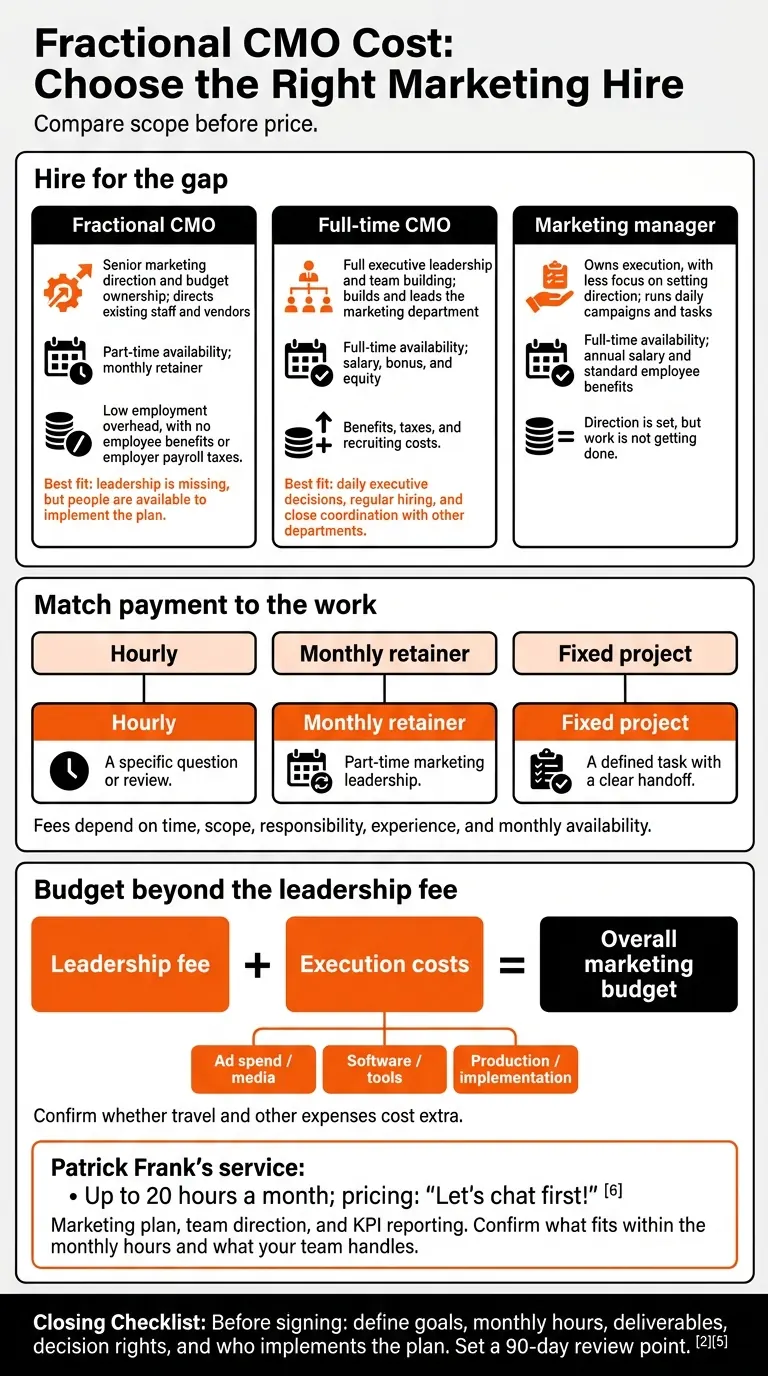
A fractional CMO’s fee depends on the time, scope, and responsibility you need. I’d compare written proposals for the same work - not just the monthly price - and budget separately for the people, ads, and tools needed to carry out the plan.
I’d choose the payment model based on the job:
- Hourly: A specific question or review.
- Monthly retainer: Part-time marketing leadership.
- Fixed project: A defined task with a clear handoff.
Before signing, I’d confirm who does the work, what decisions the CMO can make, and what costs extra. <u>Hire for the gap:</u> leadership calls for a CMO; daily campaign work may call for a marketing manager instead.
What affects price and scope?
Price depends on the work, the time required, and the authority the CMO has - not just hours. Experience and monthly availability also shape the fee. Regulated industries or long sales cycles may call for specialized expertise and more oversight. More time each month gives the CMO room to handle more execution.
Larger teams and greater authority add scope because the CMO has more people to coordinate and more decisions to make. Spell out whether they can shift budget, approve or reject work, and set priorities. If you hold them accountable for results, give them the authority to make the decisions behind those results.
Included responsibilities
Once you know the fee range, spell out what it covers: priorities, messaging, budget allocation, channel selection, team direction, and reporting against business goals.
Advice is not the same as ownership. An advisor recommends changes. A leader assigns work, follows up, and adjusts the plan. Clarify whether the fee includes day-to-day campaign production or whether your team still handles it.
Costs to confirm separately
Separate leadership fees from execution costs. Confirm who pays for media, tools, and production. Ask who writes copy, builds pages, launches campaigns, and maintains tracking - and whether the fee covers that work.
Use the marketing budget calculator to plan for costs beyond the leadership fee.
Terms to define in the agreement
Put the scope in writing. Specify hours, deliverables, meeting frequency, response times, and decision rights. Define the handoff so your company keeps access to its accounts, data, and files after the engagement ends.
Ask whether unused hours roll over and how either side can end the engagement. To limit billing surprises, state what triggers a scope change, who approves extra work, and how that work is charged. These are general contract considerations, not legal advice; have a lawyer review the agreement before you sign.
Fractional CMO vs. full-time marketing hires
A fractional CMO costs less than a full-time hire but gives you less time. Compare the leadership and daily work you need, not just the fee.
| Factor | Fractional CMO | Full-time CMO | Marketing manager |
|---|---|---|---|
| Leadership | Senior marketing direction and budget ownership | Full executive leadership and team building | Owns execution; less focus on setting direction |
| Execution | Directs existing staff and vendors | Builds and leads the marketing department | Runs daily campaigns and tasks |
| Availability | Part-time | Full-time | Full-time |
| Cost structure | Monthly retainer | Salary, bonus, and equity | Annual salary |
| Employment overhead | Low; no employee benefits or employer payroll taxes | High; benefits, taxes, and recruiting | Standard employee benefits |
When a full-time CMO makes sense
Choose a full-time CMO when marketing needs daily executive decisions, regular hiring, and close coordination with other departments.
Built In’s October 2026 report puts average total compensation for a remote U.S. CMO at $404,377.[8] That puts full-time leadership in a different budget range from a fractional retainer. Recruiting, onboarding, and other hiring costs add to the total.
When a marketing manager makes sense
If your marketing direction is set but the work isn't getting done, a marketing manager may be the better fit. Hire for the work you need done, not the title.
When should you hire a fractional CMO?
Hire a fractional CMO when you need marketing leadership, not more hands to do the work. Price comes after that distinction.
Consider this hire when marketing decisions still depend on you, spending lacks clear priorities, or your team produces work without a plan or someone responsible for key performance indicators (KPIs).[6][7]
Check your messaging, too. If your best salesperson cannot explain what the company does and why it is different in two sentences, you likely have a messaging problem that needs senior direction.[7]
Before hiring, confirm who will carry out the plan. Direction alone won’t get the work done.[6][7]
When part-time leadership is a poor fit
If you need execution rather than direction, this is the wrong hire. Part-time leadership also falls short when nobody can carry out the plan, you need constant access to an executive, or the leader lacks clear authority to make decisions.[5][7][9]
Use those same checks when reviewing a specific offer.
Patrick Frank's monthly capacity
Patrick Frank’s Fractional CMO service lists up to 20 hours a month and pricing as “Let’s chat first!” rather than a fixed fee.[6]
The service covers the marketing plan, team direction, and KPI reporting.[6]
Before agreeing on scope, separate leadership tasks from production work. Confirm what fits within the listed monthly hours and what your team will handle.[6]
How to budget and choose
Match the scope to your budget using the ranges above, and compare scope before price. Leadership fees rarely include the work needed to put the plan into action.[5][10]
Budget separately for ad spend, software, and production. Ask whether travel and other expenses cost extra.[10] Your total marketing budget should cover both planning and execution.
Before you sign, put the goal, monthly hours, deliverables, and review date in writing. Name who will handle implementation and agree on how you’ll measure progress. Set a 90-day review point.[2][5]
Use Patrick Frank’s Marketing Budget Calculator to help plan your overall marketing budget.[6] This is general information, not legal, tax, or financial advice. Consult an accountant or lawyer about questions specific to your business.
FAQs
What fractional CMO cost should I budget for?
Budget $5,000–$22,000 per month, with most standard engagements costing $8,000–$15,000 [1][2][3][4]. Senior advisors typically charge $125–$500 per hour, though most experienced professionals prefer retainers to keep planning and direction consistent [5][7][6][4][1][3].
Your cost depends mainly on the time required and whether you need planning alone or hands-on execution too [5][1][6][2]. Before signing, confirm whether the fee includes ad spend, software, and production. These costs are often billed separately [4].
How can I tell if a fractional CMO is worth the cost?
It’s worth the cost if the fee fits the work and time you need, and a senior marketing leader takes responsibility for results. Decide whether you need direction or more hands to get work done. Then weigh a full-time hire against temporary support.
Agree on measurable results, not just hours. Track potential sales, the cost of each qualified sales opportunity, and how long deals take to close. Set clear early deliverables and agree on when to review progress or end the engagement.
What should a fractional CMO deliver first?
A fractional CMO’s first month should focus on checking what’s in place, not launching campaigns. They should review your analytics, customer relationship management (CRM) system, ad accounts, and vendor reports, then flag gaps in tracking and marketing direction and agree on measurable goals with you.
The deliverable should be a written marketing plan for the next quarter, with a named owner, due date, and key performance indicators - the measures you’ll use to judge progress - for each priority. Your positioning and messaging should be settled before outreach expands.