
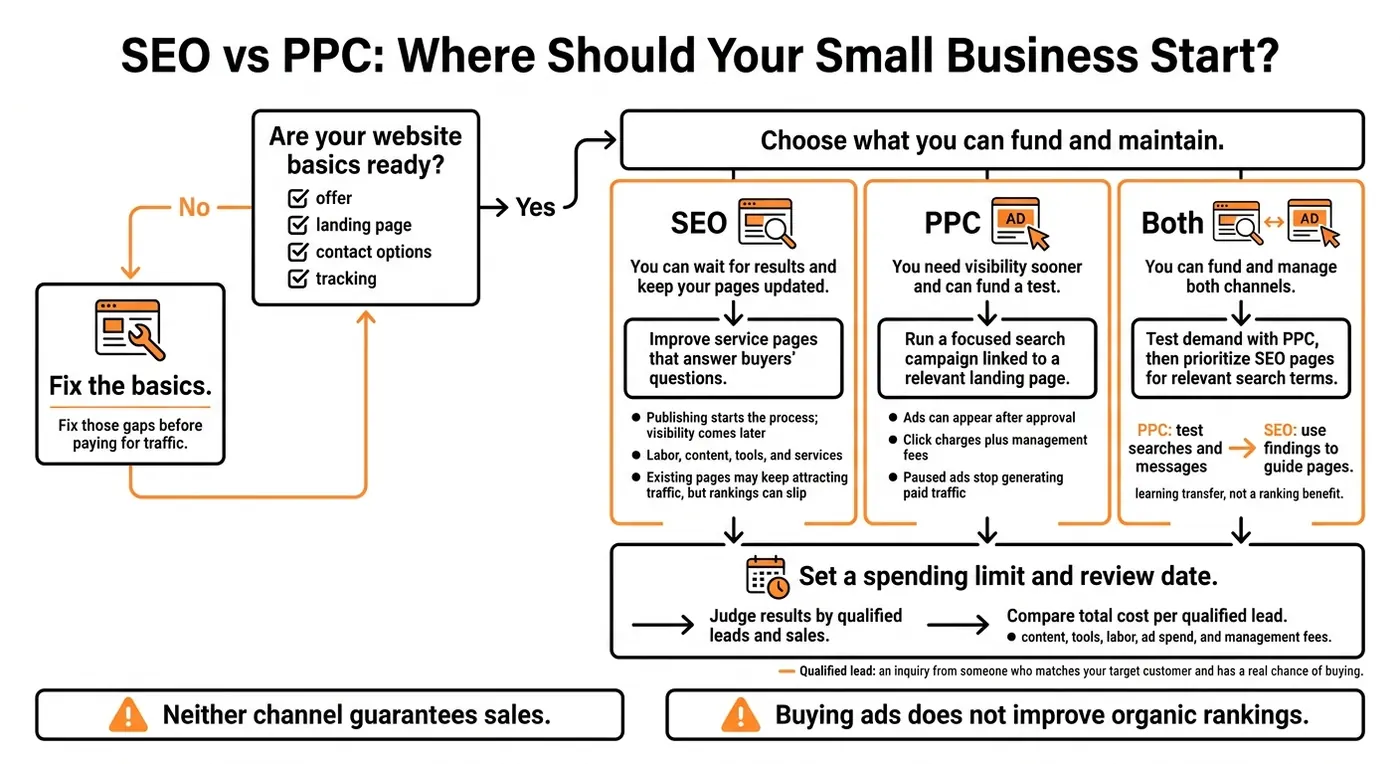
I’d start with PPC if you need search visibility soon and can fund a test; I’d start with SEO if you can wait and maintain useful pages. Before either, I’d check that your website explains your offer, makes it easy to contact you, and tracks leads or purchases.
Here’s how I’d weigh the choice:
| Factor | SEO | PPC |
|---|---|---|
| Speed | Takes time; rankings are uncertain | Ads can appear after approval |
| Cost | Time, content, tools, and paid help | Click charges, setup, and management |
| Control | Search engines decide placement | You set keywords, locations, and spending limits |
| After spending stops | Pages may still attract visitors | Paused ads stop bringing paid traffic |
Neither channel guarantees sales. I’d compare total cost per qualified lead - an inquiry from someone who fits your business - not just visits or clicks.
If your budget supports both, I’d use PPC to test search terms and messages, then use those findings to guide SEO pages. Paid results don’t prove that a page will rank, and Google states that advertising does not affect organic search placement.
<u>My starting rule:</u> fix the website first, set a spending limit and review date, then judge the test by qualified leads and sales.
SEO: Build Pages That Attract Customers Over Time
Organic clicks have no ad fee, but SEO takes time or paid help. Useful pages can keep attracting customers after the initial work, though they need time to gain visibility. [1][2] If you can wait, start with a small test page.
Plan a Small SEO Test
I'd start with a focused service or product page that matches what a customer searches for. Follow Google Search Central’s SEO Starter Guide: write original, helpful content, use clear titles and descriptions, add crawlable links from relevant pages, and give the page a clear place in your site’s structure. [5]
Track the time you spend researching, writing, and editing. If you hire help, expect a monthly retainer rather than a per-click fee. [1]
Use Google Search Console to check whether Google has indexed the page, which searches it appears for, and its impressions and clicks. These measures track visibility, not revenue. [5][8]
When to Choose SEO First
Choose SEO when customers already search for your offer, you can budget for upkeep, and you have time to wait. I'd prioritize pages tied to what you sell before publishing broad educational content. Google needs to discover and assess the page against other results, so rankings and timing remain uncertain. [2][6]
Visibility can last beyond the first round of work, but competition and changes to search systems can reduce it. Keep information current, repair broken links, and fix technical problems. [2][3]
For help choosing target pages and searches, see SEO keyword ranking services.
If you need visibility sooner, compare PPC next.
PPC: Pay for Faster Search Visibility
Pay-per-click (PPC) ads can put your business in front of relevant searchers as soon as your campaign goes live. Unlike search engine optimization (SEO), which takes time, PPC offers faster search visibility - but you need to choose keywords, set bids, and write your ads before launch. [1][2][4][7][9] Start with a fixed test budget.
Set a PPC Test Budget
Keep ad spend separate from setup, tracking, and management costs. Your total test budget should cover those costs without putting basic business needs at risk. Before spending, decide what result would justify another round. [1][8]
When to Choose PPC First
Choose PPC when you need leads soon and your offer, landing page, and tracking are ready. Send each visitor to a page that matches the ad rather than a generic homepage. Test your forms and call handling before launch so paid inquiries don’t go unanswered. [3][6][7]
Limit the test to relevant searches within your service areas. Track qualified calls, form fills, or purchases, then compare the total cost with the revenue the campaign produces. [1][7]
SEO vs PPC: Key Differences
SEO fits a longer timeline, while PPC can put ads in front of buyers after approval. Choose based on how soon you need traffic and whether your budget can cover click charges or the work needed to earn organic visibility.
| Decision Factor | SEO | PPC |
|---|---|---|
| Speed to visibility | Publishing starts the process; visibility comes later | Ads can appear after approval |
| Payment model | Labor, content, tools, and services | Click charges plus management fees |
| If you stop spending | Existing pages may keep attracting traffic, but rankings can slip | Paused ads stop generating paid traffic |
| Targeting control | Content guides relevance; search engines decide which results to show | Controls for keywords, locations, devices, and schedules |
| Best use case | Reaching people through search over time | Testing demand and reaching buyers sooner |
Buying ads does not improve organic rankings. Google keeps advertising separate from organic search, as its official SEO guidance explains. [6]
Measure Leads and Sales, Not Just Traffic
Track organic and paid results separately, and connect each channel to calls, forms, and purchases. Traffic alone doesn’t tell you whether either channel brings in business. [5][6][8]
Define a qualified lead before comparing results: an inquiry from someone who matches your target customer and has a real chance of buying. Use that definition for both channels. [5][7][8]
Compare total cost per qualified lead, including content, tools, labor, ad spend, and management fees - not just the cost of clicks. [1][8]
Use the same conversion goal - the action you want a visitor to take - for SEO and PPC. Then compare cost per conversion and the quality of the sales opportunities each channel brings in. [5][8]
Where to Start With a Small Budget
Check the full path from search to lead before you spend. Compare speed, cost, and potential return, then make sure your offer, landing page, contact options, and tracking are ready.
When to Use SEO and PPC Together
Use pay-per-click advertising (PPC) to test which searches and messages get a response. Then use those findings to guide your search engine optimization (SEO) pages. Paid results are clues, not proof that a page will rank in unpaid search results.
Choose a Channel and Review Your Results
Use the marketing budget calculator to set your test budget. Write down what the test covers, your spending limit, how you’ll measure success, and when you’ll review results. At that review, check qualified leads and sales - not promised timelines.
Choose your starting point based on what you can fund and maintain:
| Start Here | Your Situation | First Action |
|---|---|---|
| SEO | You can wait for results and keep your pages updated. | Improve service pages that answer buyers’ questions. |
| PPC | You need visibility sooner and can fund a test. | Run a focused search campaign linked to a relevant landing page. |
| Both | You can fund and manage both channels. | Test demand with PPC, then prioritize SEO pages for relevant search terms. |
| Fix the basics | Your offer, landing page, contact path, or tracking is missing. | Fix those gaps before paying for traffic. |
FAQs
How much should I budget to test SEO vs PPC?
For paid ads, plan to spend $1,000–$2,000 per month [1]. Below $1,000, you may not collect enough data to make informed campaign adjustments [1]. For professionally managed campaigns, expect $3,000–$10,000 per month to gather enough data for statistically sound conclusions [2].
For SEO, budget $500–$1,000 per month if you handle the work yourself [1]. Hiring outside help generally costs $1,500–$8,000 per month [2].
How can I tell if my test needs more time?
Give PPC time to collect consistent data before judging results. Think of the early phase as paid learning: the algorithm is learning who converts. Shutting off a campaign too soon can waste the work you put into setup.
SEO takes more patience. If you expect strong rankings too soon, you may stop before your efforts start to gain traction.
When should I shift spending from PPC to SEO?
Shift spending from PPC (pay-per-click ads) to SEO (search engine optimization) when your unpaid search rankings improve for high-value keywords and those terms consistently bring in leads. Then reduce ad spending on those keywords and move that budget to other growth areas.
Use PPC to test which keywords turn visitors into leads or customers before investing in SEO for them. Review the mix each quarter as your budget, business goals, and remaining cash change.